

Joe Rogan’s UFC Career: From Interviews to Commentary
Joe Rogan first appeared on a UFC broadcast as a backstage interviewer at UFC 12 in 1997. He later became one of the promotion’s longtime color commentators. UFC’s archive identifies UFC 12 as his first broadcast appearance.
From interviewer to commentator
Rogan began calling UFC fights in 2002. In a UFC retrospective, he recalled that Dana White asked whether he had considered doing commentary after they discussed fights. Rogan’s biography also dates his UFC color-commentary work to 2002.
Martial-arts background
Before his broadcasting career, Rogan trained and competed in taekwondo. His biography says he won the Massachusetts full-contact taekwondo championship four consecutive years and later won the U.S. Open title. He also trained in Brazilian jiu-jitsu; the UFC reported his promotion to a jiu-jitsu black belt under Eddie Bravo.
Two Different Jobs on a UFC Broadcast
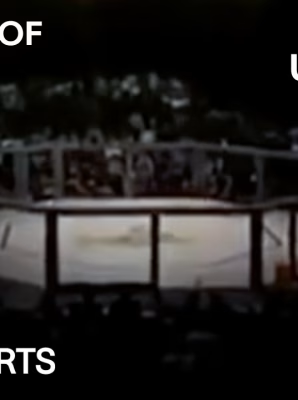
Rogan’s first assignment came in Dothan, Alabama, at an event remembered for Mark Coleman’s heavyweight championship victory over Dan Severn. The archive footage places his early interviews within that stage of UFC history. It also helps distinguish his original reporting role from the commentary position he took on several years later.
A backstage interviewer gathers reactions and asks fighters about a contest, while a color commentator provides analysis as the action develops. The latter role can involve explaining a grappling position, identifying a submission threat or discussing the tactical importance of a striking exchange. Rogan’s martial-arts experience forms part of the background he brings to that work.
The 1997 and 2002 dates therefore describe separate milestones in his UFC career. His initial appearance introduced him as an interviewer, and the later transition put him into the live commentary team. Looking at both stages gives a clearer account of his broadcast development than treating his first UFC appearance as the start of his color-commentary tenure.
Historical context: UFC’s retrospective on its first three decades.